#281: Shipping Containers – Yep People Are Living In Them

The Shipping Container innovation dropped shipping costs from $5.83 a ton to 16 cents. It made the world a smaller place. Dave Young: Welcome to the Empire Builders Podcast, teaching business owners the not so secret techniques that took famous businesses from mom and pop to major brands. Stephen Semple is a marketing consultant, story collector, and storyteller. I’m Stephen’s sidekick and business partner, Dave Young. Before we get into today’s episode, word from our sponsor, which is, well, it’s us, but we’re highlighting ads we’ve written and produced for our clients. So, here’s one of those. [Tappers Jewellers Ad] Dave Young: Welcome back to the Empire Builders Podcast. Dave Young here with Stephen Semple, and we’re telling you stories about empires and things that changed the world. And man, today’s topic changed your world. It changed your- Stephen Semple: Oh God, yeah. Dave Young: It changed everybody’s world, and it’s probably simpler than you think it ought to be. And it is the story of the shipping container, right? The big metal sea cans, the boxes that now people are living in them. Stephen Semple: It’s true. Dave Young: What can we turn this into? But for most of mankind’s history, ships were loaded by burly men lugging things up ramps. Stephen Semple: Well, we see those old movies where there’s a net with stuff in it being lowered down to the- Dave Young: Yeah. A big net lowered into a hole in the ship to get it down into the hold. And that’s just how it worked for forever. Stephen Semple: Well, it’s estimated that this innovation dropped shipping costs from $5.83 a ton to 16 cents. And this is- Dave Young: 16 cents a ton. Stephen Semple: Yeah. Which, all of a sudden, made it possible. There were all sorts of products that just you couldn’t ship because the shipping costs were just too high. Dave Young: Yeah. Stephen Semple: Right? Dave Young: That changes Tennessee Ernie Ford’s song completely, right? You load 16 tons, what do you get? $2.56 is what you get. It’s not another day older and deeper in debt, $2.56.

#281: Shipping Containers – Yep People Are Living In Them Read More »
#280: UGG – From Australia To California

Brian sees his opportunity when notices Americans wearing sheep skin boots and thinks we have lots of sheep… Dave Young: Welcome to the Empire Builders Podcast, teaching business owners the not so secret techniques that took famous businesses from mom and pop to major brands. Stephen Semple is a marketing consultant, story collector, and storyteller. I’m Stephen’s sidekick and business partner, Dave Young. Before we get into today’s episode, a word from our sponsor, which is, well, it’s us, but we’re highlighting ads we’ve written and produced for our clients. So here’s one of those. [Wagmore Garage Door Ad] Dave Young: Welcome to the Empire Builders Podcast. Dave Young here, got Steve Semple along here, and Stephen just whispered in my ear, he thought that this would be a brand that I was very familiar with for some reason. And then he said it’s a fashion brand. I’m like, so what about that word makes you think… Are we going to talk about Sears Garanimals or JC Penney? No, we’re going to talk about UGG boots. UGG boots. Stephen Semple: Yes. Yeah. Dave Young: Now, my earliest recollection, I think it might not even be UGG boots, is on a ski area maybe in the ’70s. And there were women walking around in these big furry, furry, furry boots. And I don’t know if those were UGG’s or not, but they were just as ugly as UGG’s. And UGG’s, they’re like a sheepskin boot made in Australia. Stephen Semple: They’re a sheepskin boot. Dave Young: And they’re kind of loose fitting or at least on the ankles and… Yeah. Stephen Semple: They came out of Australia, that’s the origin. And UGG does like $2.7 billion. They’re part of Deckers today. They’re basically sold to Deckers for 14 and a half million dollars. They were in 1995 and Deckers really grew the crap out of them. Dave Young: Okay. I don’t know who Deckers is. Stephen Semple: So Deckers is another shoe brand. Dave Young: Big multi-conglomerate shoe brand or a real shoe company? Stephen Semple: No, they’re a real shoe company, but with a number of different… But put in perspective, UGG is bigger than Hoka.

#280: UGG – From Australia To California Read More »

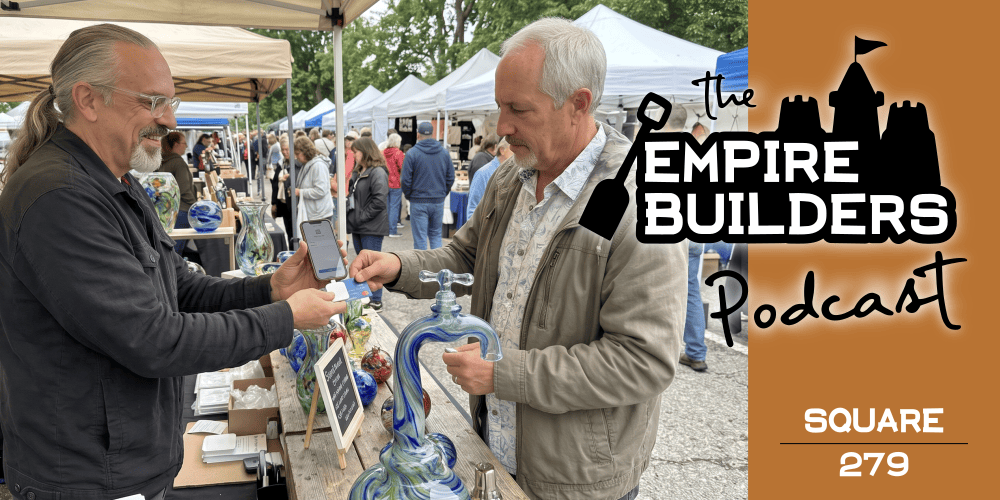
#279: Square – Thinking Inside The Box

Jim McKelvey looks at his iPhone and thinks this is a phone, a camera, a map, a music player and a camera… Why not a credit card machine? Audio: Dave Young: Welcome to The Empire Builders Podcast, teaching business owners the not so secret techniques that took famous businesses from mom and pop to major brands. Stephen Semple is a marketing consultant, story collector, and storyteller. I’m Stephen’s sidekick and business partner, Dave Young. Before we get into today’s episode, word from our sponsor, which is, well, it’s us, but we’re highlighting ads we’ve written and produced for our clients. So here’s one of those. [Seaside Plumbing Ad] Dave Young: Welcome back to The Empire Builders Podcast. I’m Dave Young and Stephen Semple is here with another fantastic story for us to intrigue us and entertain us, et cetera, et cetera. And he told me just before we started here that we’re going to be talking about Square. That wasn’t the Charlie Brown reference. He wasn’t square. No, we’re talking about the little credit card dongle. It’s a dongle company because I don’t think we’ve covered enough dongle companies. Stephen Semple: I think this is actually, have we covered anybody else who’s done something like that? I don’t think so. Dave Young: They probably didn’t… Well, I’m anxious to find out, because now the dongles are not a thing because you can tap- Stephen Semple: Right. Dave Young: For the most part. But let’s hear about Square. Stephen Semple: They were founded in 2009 by Jim McKelvey and Jack Dorsey. They’re both from St. Louis and Jack Dorsey, of course- Dave Young:

#279: Square – Thinking Inside The Box Read More »

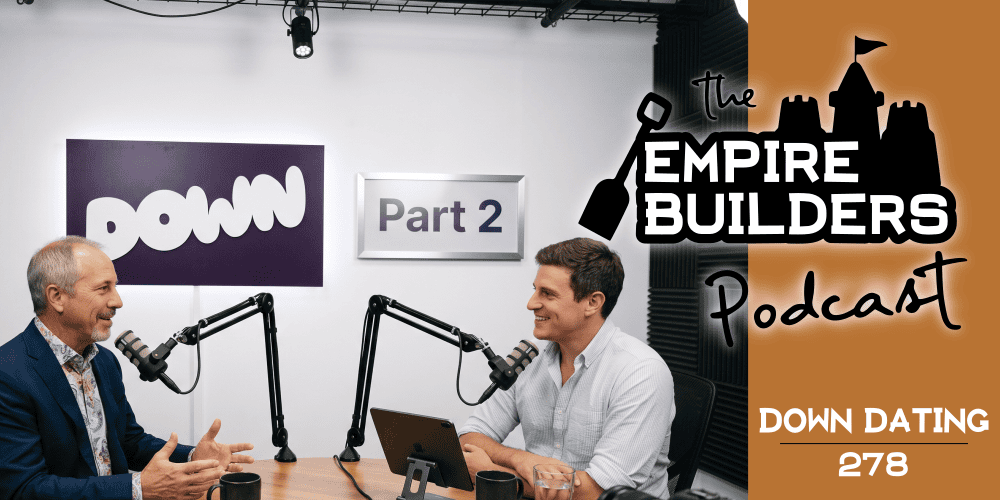
#278: Down Dating – Part 2 – Doubling Down and Getting Focused

Colin understood that being an entrepreneur meant developing muscles you don’t have as an “employee”. Focus, commitment, resilience… Dave Young: Welcome to The Empire Builders Podcast, teaching business owners the not so secret techniques that took famous businesses from mom and pop to major brands. Stephen Semple is a marketing consultant, story collector, and storyteller. I’m Stephen’s sidekick and business partner, Dave Young. Before we get into today’s episode, word from our sponsor, which is, well, it’s us, but we’re highlighting ads we’ve written and produced for our clients. So, here’s one of those. [Kooler Garage Doors Ad] Gary: Told you, Brian. Brian: Told me what? Gary: This is part two of last week’s episode. Brian: Oh yeah, and it was getting good. Gary: If you missed it, go back and listen to part one first. Take it away, fellas. Stephen Semple: Journaling is something that I will self-confess here. It’s something I’m trying to become better at. And often, I struggle with what should you do in the journaling. So I really like the tip that you gave there about, literally, writing down how are you feeling, why do you feel this way. And again, journaling, I do recognize as pen to paper, not typing. There’s something about writing things down in your own handwriting. And the fact is there’s a value to that slowing things down. It’s that forced slowdown, because we can only write so fast. But the other part I though that was really interesting was this whole idea of in that storm talking to people, and purposely talking to people who are not business people or who are not in your industry. I don’t know about you, but this is what I found, is when I talk to people who have that little bit of distance, sometimes that whole forcing me to explain it to them actually helps me build clarity. And I’ve even found sometimes, “Okay. Yeah, I am thinking about this all wrong,” because now that I’m trying to explain it and I’ve seen the glassy eyes, I realize, “Yeah, I’m being a little nuts here.” Colin Hodge: Yeah, exactly. That’s a great addition, because so many times it’s in our head and it’s swirling around, and we think we have complete clarity about it. We understand this problem. And you try to explain it to somebody who has much less context on it, it absolutely uncovers that logical error you’re making or the emotional side that you’re not really acknowledging. It helps so much. So, I love that as well of just even if the person knows about it, explain it to them again. Explain it like they’re five years old even, and break it down on that simple level. Stephen Semple: And if you can’t explain it, you haven’t got it clear in your own mind. Colin Hodge: Yes, exactly. Stephen Semple: But what I love is the journaling and whatnot, think our challenge is in those moments of the world is crumbling around us, there’s all these challenges happening, the whole idea of giving ourselves permission to step away, stop. As you said, it goes, “I’m a firm believer that really great thinking comes from changing your environment.” Going to a different environment and actually taking time with all this stuff, I think, is hard for a lot of people to do because I think our natural thing is, “Oh no, there’s all these things happening. I’ve got to double down on effort.” I think that’s our natural tendency is to do that. Colin Hodge: It is. And I think part of that is building this as a muscle, just like you need to build your faith and your own resilience. As an entrepreneur, you also need to build your faith in this process, in giving your brain the right environment and the right space to work through the problem. And so, a simple way to look at it is if you’ve ever had a big decision, felt overwhelming, and then you slept on it and the next day it was so simple, much easier to just make that call, that’s what you’re doing, but on a bit of a longer scale. You’re giving your brain time to process it, and new inputs and things to shake it out of whatever the rut that it’s in.

#278: Down Dating – Part 2 – Doubling Down and Getting Focused Read More »

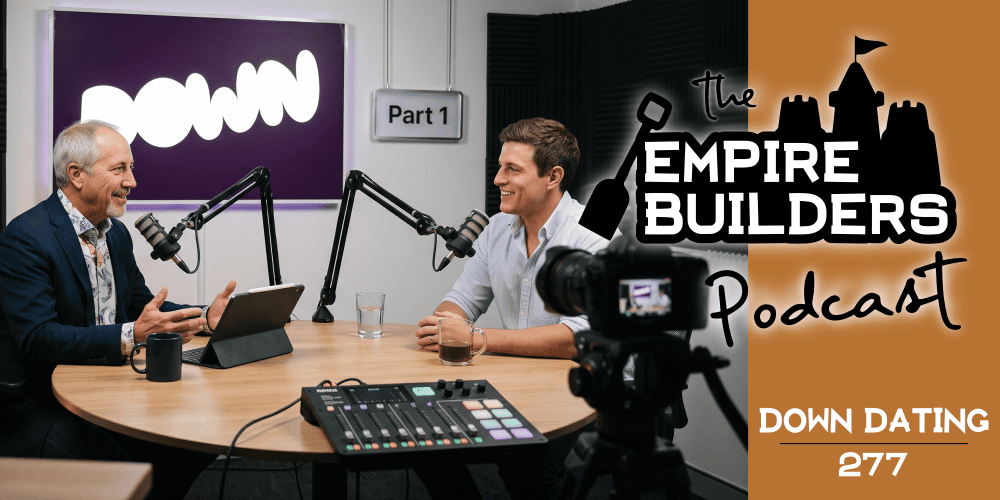
#277: Down Dating – Part 1 – Created, Sold and Bought Back Again

Colin Hodge created a dating app the took off and got a lot of attention. He just did expect to buy it back after he sold it. Dave Young: Welcome to The Empire Builders Podcast, teaching business owners the not so secret techniques that took famous businesses from mom and pop to major brands. Stephen Semple is a marketing consultant, story collector, and storyteller. I’m Stephen’s sidekick and business partner, Dave Young. Before we get into today’s episode, a word from our sponsor, which is, well, it’s us, but we’re highlighting ads we’ve written and produced for our clients. So here’s one of those. [Travis Crawford HVAC Ad] Stephen Semple: Hey, it’s Stephen Semple here and I have with us, we’ve given Dave Young a bit of a break, and I have with us Colin Hodge, who is the founder of… It’s such an interesting story. So he’s a founder of a dating app. We’re going to talk a little bit more about that dating app. He grew it, sold it, bought it back. Again, one of those really crazy stories. And I actually remember, we talked quite a while ago and I remember that we squeezed in this call, literally, I was traveling into downtown Toronto and I pulled off off the road at one spot to do this telephone call. And it was literally one of those ones where I think three or four minutes into the call, I was like, “Oh, this is such a good story. We have to talk about this.” And Colin, you’re also a bestselling author, so you’ve got a book out. Let’s explore what happened because it’s, again, one of those build it, sell it, buy it back stories, which I always love. Colin Hodge: I’m so happy to hear that, Stephen. Thank you for having me, and I hope your listeners enjoy it as much as you did in our initial call. It was an absolutely crazy journey starting this company, getting international attention, what felt like overnight and being on the front of every webpage, getting on national TV in the US, and then eventually selling the company and buying it back. So I’m happy to walk through all that stuff and hopefully there’s some good lessons in here for other builders out there. Stephen Semple: I’m sure there will be. So tell me about the starting of the dating app, how you got this started and what was the inspiration for starting that? That’s not something that everybody wakes up in the morning going, “I’m going to do a dating app.” Colin Hodge: Like most founders, I had the problem myself first and I went on a few bad dates and one was just incredibly insufferably bad. I won’t go into that, but suffice it to say that it endangered my physical health. Let’s just put it that way. Stephen Semple: Wow. Colin Hodge: After that, I knew I could do better, right? I knew I could do better. I was always very curious about sociology and psychology. Why are we attracted to the people we are? How do dating rules work? How do you learn how to date? How do you even make friends? All these things about social dynamics that I was curious from a young age. I really, during my early 20s, started to look into it more. And then by my mid to late 20s and I had these dating issues, it all came together and it became clear to me, this is what I should start. I should try this because I could tell you right that back then, nothing else, nobody else was doing a good job at it. So I figured why not me? Why can’t I do better? Stephen

#277: Down Dating – Part 1 – Created, Sold and Bought Back Again Read More »

#276: General Mills Fruit Roll-Up – Good Food Marketed as FUN!

First they tried to make a cake filling product, but figured out that healthier foods need to be fun for kids to eat them. Dave Young: Welcome to The Empire Builders Podcast, teaching business owners the not so secret techniques that took famous businesses from mom and pop to major brands. Stephen Semple is a marketing consultant, story collector and storyteller. I’m Stephen’s sidekick and business partner, Dave Young. Before we get into today’s episode, a word from our sponsor, which is, well, it’s us, but we’re highlighting ads we’ve written and produced for our clients. So here’s one of those. [Kooler Garage Doors Ad] Dave Young: Welcome back to the Empire Builders Podcast. Stephen Semple is here. I’m Dave Young, and then Stephen’s going to bring us part two of the engaging Fruit Roll-Up story, and this time we are heading to the evil empire of big corporate food. Stephen Semple: I was expecting that. Dave Young: It’s probably not evil empire, but it’s big food. I don’t know. How big is General Mills? Stephen Semple: Oh, god. Dave Young: They own pretty much all of it unless it’s owned by Nestlé. And maybe they own Nestlé or Conagra. Stephen Semple: Yeah. To put it in perspective, just their Fruit Roll-Up sales of their business is estimated to be like $200 million a year. Dave Young: Oh, okay. Just Fruit Roll-Ups. Stephen Semple: Just Fruit Roll-Ups.

#276: General Mills Fruit Roll-Up – Good Food Marketed as FUN! Read More »

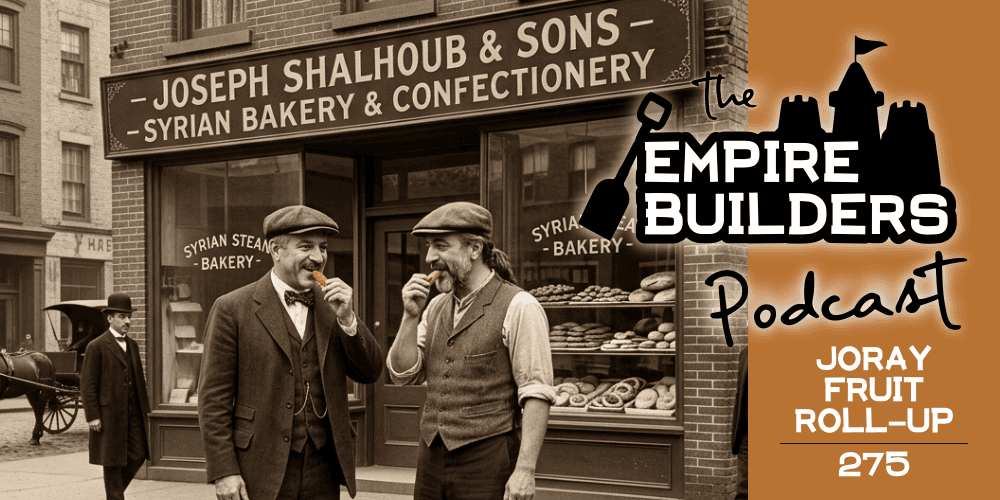
#275: Joray Fruit Roll-Up – Yup, They Invented It!

Have you ever heard of fruit leather? You know, that famous Syrian treat. Well, let’s learn how that became the iconic Fruit Roll-Up. Dave Young: Welcome to the Empire Builders Podcast, teaching business owners the not so secret techniques that took famous businesses from mom and pop to major brands. Stephen Semple is a marketing consultant, story collector and storyteller. I’m Stephen’s sidekick and business partner, Dave Young. Before we get into today’s episode, word from our sponsor, which is, well, it’s us. But we’re highlighting ads we’ve written and produced for our clients. So, here’s one of those. [A&A Roof Ad] Dave Young: Welcome to the Empire Builders Podcast, I’m Dave Young. Steve Semple is here with another story, and he told me that this episode’s going to be a two-parter because this product has two phases. Stephen Semple: It does. Dave Young: The invention phase and then sort of the suborbital stage one. But fruit roll-ups, or as we like to call it in Nebraska, the devil’s lettuce. Stephen Semple: The devil’s lettuce. Dave Young: No, that’s something else, nevermind. Fruit roll-ups. Stephen Semple: Fruit roll-ups. Dave Young: Man, I missed the… I mean, they were starting to come around out in Western Nebraska, you barely got fruit that wasn’t just ugly, let alone rolled up and put in a package. But I remember it came on big cellophane sheets. Stephen Semple: Yeah. It’s a billion dollar product category today. Dave Young:

#275: Joray Fruit Roll-Up – Yup, They Invented It! Read More »

#274: Palm Pilot – Inspired By A Failed Product

Apple’s PDA device Newton was a little too ambitious. So Jeff Hawkins, did the opposite and removed capabilities to create Palm Pilot. Dave Young: Welcome to the Empire Builders Podcast, teaching business owners the not-so-secret techniques that took famous businesses from mom and pop to major brands. Stephen Semple is a marketing consultant, story collector and storyteller. I’m Stephen’s sidekick and business partner, Dave Young. Before we get into today’s episode, a word from our sponsor, which is, well, it’s us, but we’re highlighting ads we’ve written and produced for our clients. So here’s one of those. [Kooler Garage Doors] Dave Young: Welcome back to the Empire Builders Podcast. Dave Young here with Stephen Semple, who’s been out digging up stories about empires, giant empires that took over the world and then somehow lost it. Stephen Semple: Well, this one sure did. Dave Young: Yeah, they sure did. Stephen made an assumption as he whispered the topic into my ear just as he hit the record button, and that is that at some point in my life I owned a PalmPilot because that’s the topic for today’s is the PalmPilot. Everybody remembers that. And, Stephen, the answer to your question is, no, I didn’t. I did not own a PalmPilot. Stephen Semple: You did not? Dave Young: No, I was too cheap. I had a cheap Sony knockoff of a PalmPilot. Stephen Semple: Wow. Dave Young: It had a little camera in it, though. Stephen Semple: Oh, the [inaudible 00:02:18]. Dave Young:

#274: Palm Pilot – Inspired By A Failed Product Read More »

#273: BNI – Part 2 – Continuing The Growth

Dr. Misner learned that the law of reciprocity is the strongest form of connection and now “Givers Gain” is the philosophy that all the members of BNI live by. Dave Young: Welcome to the Empire Builders Podcast, teaching business owners the not so secret techniques that took famous businesses from mom and pop to major brands. Stephen Semple is a marketing consultant, story collector and storyteller. I’m Stephen’s sidekick and business partner, Dave Young. Before we get into today’s episode, word from our sponsor, which is, well, it’s us, but we’re highlighting ads we’ve written and produced for our clients. So here’s one of those. [Wagmore Garage Doors Ad] Gary: Told you, Brian. Brian: Told me what? Gary: This is part two of last week’s episode. Brian: Oh, yeah. And it was getting good. Gary: If you missed it, go back and listen to part one first. Take it away, fellas. Stephen Semple: Was there a big moment? Was there a big challenge? Was there a setback? So what are some of the things that you face that you had to deal with in this journey? Dr. Ivan Misner: Feature Creep is ongoing. I didn’t quite set up BNI to be as smooth a business as it could have been. Franchising in the early days was complex to figure out, but that’s not the single biggest thing. The thing that almost bankrupted me was what’s called BNI Connect. And I don’t know, Stephen, if you were part of BNI when we introduced BNI Connect. Stephen Semple:

#273: BNI – Part 2 – Continuing The Growth Read More »

#272: BNI – Part 1 – The Unexpected Origin

Dr. Ivan Misner was looking for more business so he set up a business networking meeting. What happened next he didn’t anticipate. Dave Young: Welcome to the Empire Builders Podcast, teaching business owners the not so secret techniques that took famous businesses from mom and pop to major brands. Stephen Semple is a marketing consultant, story collector, and storyteller. I’m Stephen’s sidekick and business partner, Dave Young. Before we get into today’s episode, word from our sponsor, which is, well, it’s us, but we’re highlighting ads we’ve written and produced for our clients. So here’s one of those. [Kooler Garage Door Ad] Stephen Semple: Hey, it’s Steven Semple here for another episode of the Empire Builders Podcast. And Dave Young hasn’t joined us today, but I’m really excited by the guest that we have for today. We have Dr. Ivan Misner and boy, this is going to be an exciting story. So Dr. Misner started an organization called BNI. I’m sure many of you are familiar with it, but those of you who aren’t, let me give you an idea of how much of an empire this is. According to the information I have, over 350,000 members, close to 12,000 chapters, 78 countries, annual member-generated business, almost north of $25 billion. I used to be in a BNI chapter, and in fact, I used to run a BNI chapter many, many years ago. The average chapter size is 30 members. That is just massive, especially when you consider it was founded in 1985, and as we were talking about before hitting the recording, out of your garage. Dr. Ivan Misner: Yeah, my garage and just a room above my garage. Stephen Semple: Oh, well, there you go. You started in the lap of luxury, room above your garage. But when you think about that, that’s like 12,000 weekly meetings happening around the world. Dr. Ivan Misner: That’s exactly it. Every week. And you mentioned 25 billion, in the last 12 months, it’s 27 billion in what we call thank you for closed business. And what I think is important to say is that’s not how much money the company has generated, that’s how much money the members reported that they generated in referrals. Now, what I love about that number is, Stephen, if you take a look at the United Nations estimates of GDP, UN estimates of GDP, there are actually a hundred countries in the world, a hundred countries in the world with a lower GDP than what BNI generated for its members last year. Stephen Semple: That is just a remarkable number, just absolutely remarkable number. So tell me a little bit, because there is an interesting story here in terms of how you got started. So what started this? Oh, and the last thing I want to say is when we think about this in terms of institutions, in terms of whether it’s business referrals or business groups, this makes it one of the largest in the world. I think I’d be hard-pressed to find something that rivals the size. Dr. Ivan Misner: In person, you’re correct. We are the largest referral marketing platform in the world. Online, you can get a lot of people online, but we, as you said, have over 350,000 members who meet every week in person. Some of them are Zoom meetings now, and some are hybrid, but most of our groups still meet in person. Stephen Semple: And I think the thing that I’d like to stress just for listeners to understand is there’s lots of places that will have lots of members and the 80/20 rule. Some members are active, some members are not active. But in BNI, for you to be a member, you have to be active. You have to show up, you have to participate. So when somebody like BNI says, “We’ve got over 350,000 members,” that’s a real number. Dr.

#272: BNI – Part 1 – The Unexpected Origin Read More »

Scroll to Top